- Home
- Towns no longer in Hungary
The town moved countries. The register did not.
Most of historic Hungary lies outside today’s borders. If your family came from there, the search goes to the archive of the country that has the town now.
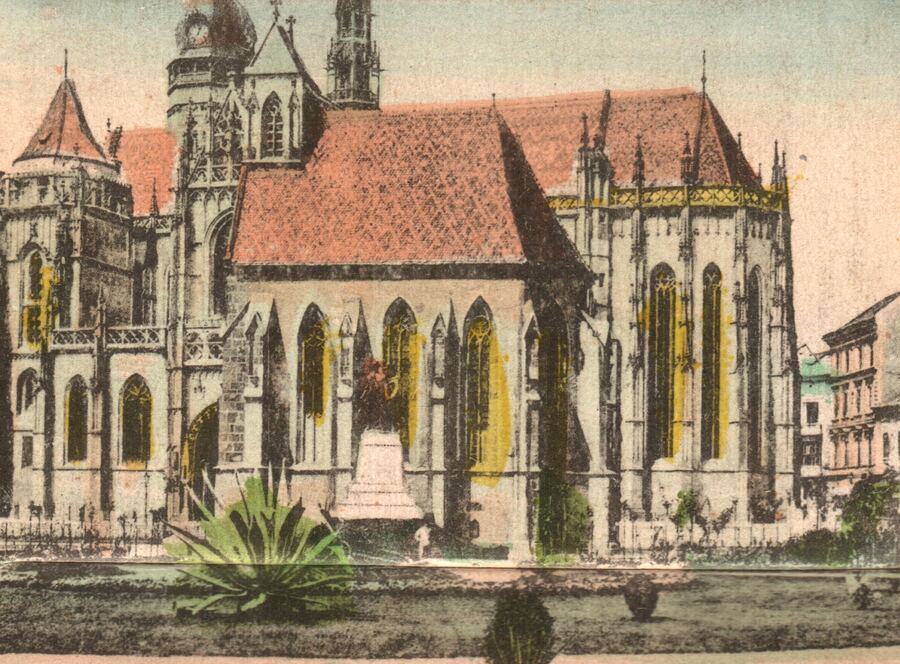
A great-grandfather born in Kassa, Munkács or Szatmár was born in Hungary, but his birth register is today in Slovakia, Ukraine or Romania. The record is looked for there, in the old Hungarian books that those archives keep.
The dates that moved the border
- 4 June 1920: the Treaty of Trianon is signed. It comes into force on 26 July 1921.
- 1938 to 1941: parts of the lost lands return to Hungary: southern Slovakia (November 1938), Subcarpathia (March 1939), northern Transylvania (August 1940) and Bácska (April 1941).
- After the Second World War those lands leave Hungary again. The Paris Peace Treaty comes into force on 15 September 1947.
So the books of one town can change language several times. In Subcarpathia, for example, the state registers are in Hungarian from 1895 to about 1919, then follow the Czechoslovak years, and Hungarian returns after 1939.
Old name, new name
| Hungarian name | Name today | Country today |
|---|---|---|
| Kassa | Košice | Slovakia |
| Pozsony | Bratislava | Slovakia |
| Munkács | Mukachevo | Ukraine |
| Ungvár | Uzhhorod | Ukraine |
| Beregszász | Berehove | Ukraine |
| Máramarossziget | Sighetu Marmației | Romania |
| Szatmárnémeti | Satu Mare | Romania |
| Nagyvárad | Oradea | Romania |
| Kolozsvár | Cluj-Napoca | Romania |
| Szabadka | Subotica | Serbia |
| Újvidék | Novi Sad | Serbia |
| Kismarton | Eisenstadt | Austria |
Finding the right place is a job in itself. Villages changed names, joined together or split, and several places had the same name. The first step of every search is to fix the place on the old map and on the new one.
Where the registers are today
Slovakia
The National Archives of Hungary gives its own example: for a birth in Fülek, today Fiľakovo, it sends the researcher to the Slovak archives. Church registers from before 1895 are generally in the Slovak state archives. State registers move from the town hall to the state archive once the newest entry in the book is a hundred years old.
Ukraine: Subcarpathia
The old counties of Bereg, Máramaros, Ugocsa and Ung are now mostly in the Zakarpattia region. Older material is kept by the regional state archive. For Jewish families there is a large index: volunteers of JewishGen have photographed and copied out more than 400,000 state register entries from 1895 to 1939.
Romania: Transylvania, Szatmár, Máramaros, Bihar
Registers older than about a hundred years are generally held by the county branches of the Romanian National Archives; newer ones are at the town halls. Unlike in the rest of Romania, church and community registers from before state registration have largely survived here, because the region belonged to Hungary.
Serbia, Croatia, Austria, Slovenia
The same rule applies: the register is with the archive or registry office of today’s country. Each has its own waiting periods and its own way of asking, and I check them for your town before quoting.
The National Archives of Hungary has microfilm of a small number of registers from outside today’s borders, mainly from the Csallóköz, Bácska, Burgenland, the Mura region and the southern part of Baranya.
What this means for citizenship
The border matters for more than the search. The Hungarian consulate in New York writes that, in general, people living outside the present borders lost their Hungarian citizenship after 1921 and became citizens of the country that received the territory, with some exceptions. Which rule applies to your family is for the authorities to decide. The citizenship documents guide sets out what they ask for.
Where these facts come from
- National Archives of Hungary, “Family research” (mnl.gov.hu)
- National Archives of Hungary, “Parish registers” (mnl.gov.hu)
- JewishGen, “Subcarpathia Civil Registration” database notes (jewishgen.org)
- JewishGen, “Slovak Civil Vital Records” database notes (jewishgen.org)
- JewishGen, Romania vital records database notes (jewishgen.org)
- Consulate General of Hungary in New York, “Verification of Hungarian citizenship” (newyork.mfa.gov.hu)
From the archive to your file
Tell me the town as your family said it.
Even a name that is on no map today. Working out where it is now is the first thing I do.